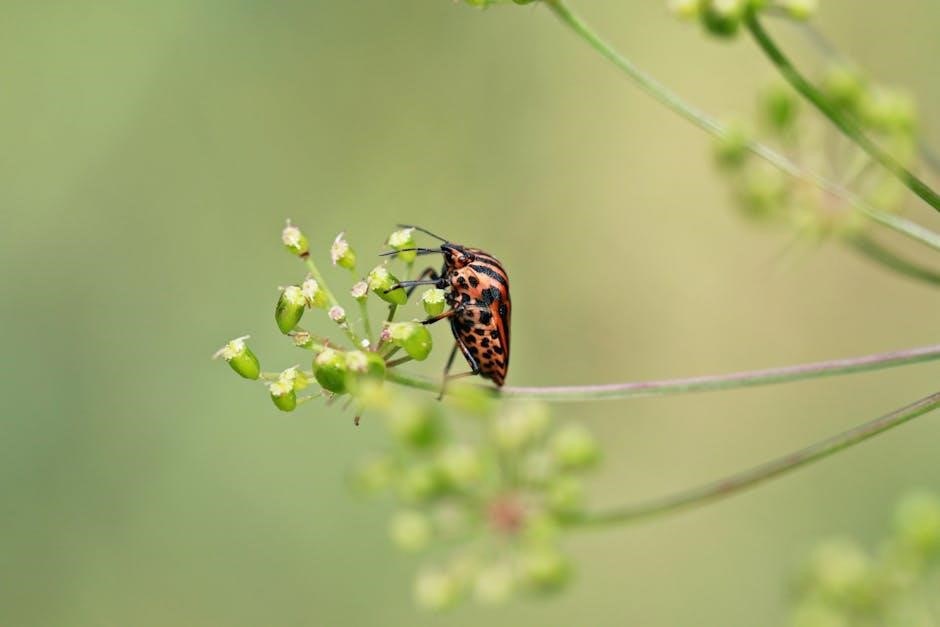
Discovering the world of tree seed pods requires a keen eye and a systematic approach; this identification guide unlocks nature’s secrets!
Why Identify Seed Pods?
Understanding seed pods is crucial for several reasons, extending beyond simple botanical curiosity. Accurate identification aids in tree species determination, especially when leaves or flowers aren’t present – a common scenario during winter months. Knowing the pod type assists in understanding seed dispersal mechanisms, revealing fascinating ecological relationships.
Furthermore, seed pod identification supports conservation efforts by helping monitor tree health and regeneration. Careful collection, as highlighted in resources, allows for propagation and restoration projects. Recognizing pods also connects us to traditional uses, from medicinal properties to historical applications. Ultimately, it deepens our appreciation for the intricate life cycles within the natural world.
The Importance of Seed Pod Characteristics
Seed pod characteristics are paramount for accurate identification, acting as unique fingerprints for each tree species. Shape – whether flat, round, or spiky – provides an initial clue, alongside size variations ranging from pea-sized to bean-like. Color is also significant, changing with maturity and offering valuable insights.
Beyond these basics, features like the presence of wings (samaras) or bristles are key differentiators. Observing how the pod opens (dehiscence) reveals dispersal strategies. Utilizing a dichotomous key relies heavily on these details. Even texture and surface patterns contribute to a complete profile, enabling precise species recognition and fostering a deeper understanding of plant diversity.
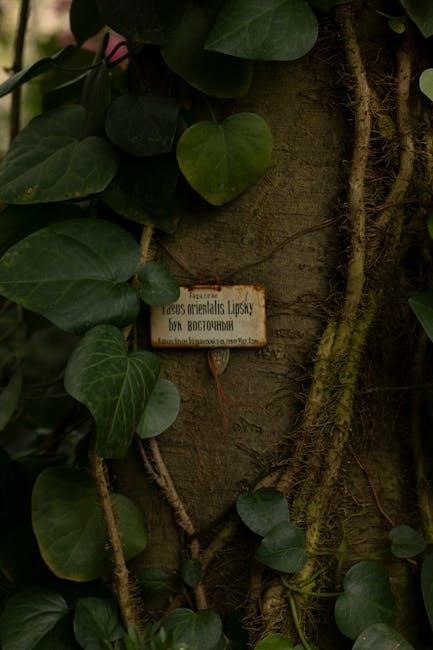
Basic Seed Pod Morphology
Understanding seed pod form—shape, size, and color—is fundamental to identification; these morphological traits provide essential clues for accurate tree species determination.
Seed Pod Shape Variations
Seed pod shapes exhibit remarkable diversity across tree species, serving as a primary identification characteristic. They range from the flattened, winged samaras of maples – designed for wind dispersal – to the spherical or oblong forms of acorns. Ash seed pods often present as single-winged structures, while others, like those of legumes, are elongated and pod-like. Some pods are round, others curved or twisted, and a few even display spiky exteriors; Observing whether a pod is linear, ovate, or irregular is crucial. Variations in shape reflect adaptations to different dispersal mechanisms and evolutionary histories, making shape a key element in accurate tree identification. Careful observation of these forms unlocks a deeper understanding of the natural world.
Seed Pod Size and Dimensions
Seed pod size is a surprisingly useful identifier, though it requires comparison within a species. Dimensions can range from minuscule, pea-sized pods to substantial structures several inches long. Measuring length, width, and even thickness provides valuable data; Acorns, for example, vary significantly in size depending on the oak species. Maple samaras are typically small, around an inch long, while legume pods can reach several inches. Noting whether a pod is tiny like a pea or long like a bean is a helpful starting point. Consistent size ranges are characteristic of specific trees, aiding in narrowing down possibilities during identification, and providing crucial clues.
Seed Pod Color as an Identifier
Seed pod color offers a readily observable characteristic for identification, though it can change with maturity. Initially, pods are often green, transitioning to shades of brown, red, or even purple as they ripen. The Tree Council highlights color variations within maple and ash seed pods. Observing subtle hues and patterns is key; some pods display mottled coloration or distinct veins. Color isn’t always definitive, as environmental factors can influence it, but it’s a valuable initial clue. Comparing the pod’s color to reliable field guides or online databases, alongside other features, significantly improves accuracy in tree identification, offering a quick visual assessment.
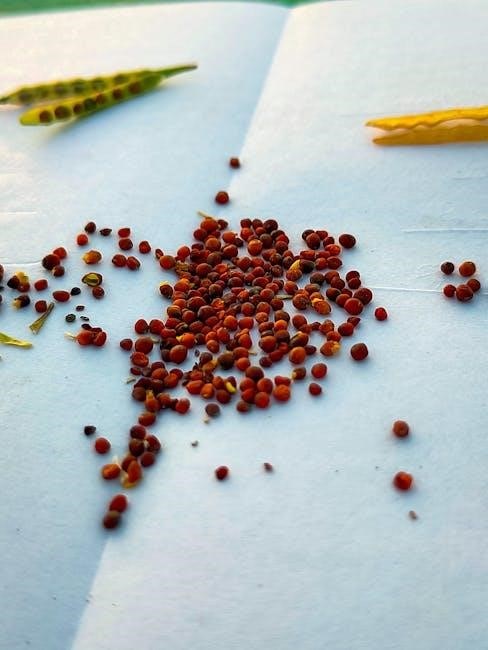
Common Tree Seed Pod Types
Explore familiar forms like maple samaras, ash pods, oak acorns, and pine cones – each uniquely designed for dispersal, aiding in tree identification.
Maple Seed Pods (Samaras)
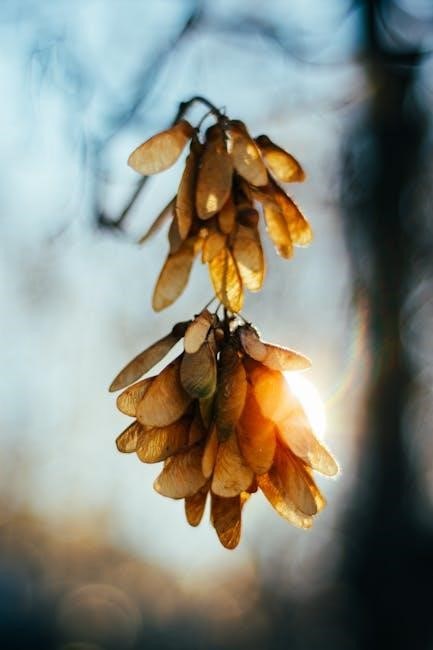
Maple samaras, often called “whirlybirds,” are easily recognized by their distinctive winged shape. These pods develop in pairs, joined at the base, and facilitate wind dispersal. Their size varies depending on the maple species, ranging from small, delicate samaras of the red maple to larger ones from silver maples.
Coloration typically starts green, maturing to tan or brown as they ripen. The angle of the wings is crucial for spinning as they fall, maximizing air time and distance. Observing the shape of the wings – whether broadly rounded or narrowly pointed – can help narrow down the specific maple species. Look for these pods in late spring and early summer, often carpeting the ground beneath maple trees.
Ash Seed Pods
Ash tree seed pods, unlike the winged samaras of maples, are single-winged structures called samaras, but they develop individually, not in pairs. These pods are typically paddle-shaped, with a prominent vein running down the center of the wing. They hang on the tree for a considerable time, often persisting through the winter months.
Coloration begins as green, transitioning to a brownish hue as they mature. Ash samaras are relatively large compared to maple samaras, measuring around 1-2 inches in length. Identifying ash trees by their seed pods can be tricky due to the delayed release, but their unique shape and single-wing structure are key characteristics. Look for clusters of these pods on the ground beneath ash trees in late fall and winter.
Acorns (Oak Tree Seed Pods)
Acorns, the iconic seed pods of oak trees, are easily recognizable due to their distinctive cup-like structure, called a cupule, that partially encloses the nut. These pods vary significantly in size and shape depending on the oak species, ranging from small, rounded acorns to larger, elongated ones. The color also differs, from light tan to dark brown.
Acorns are non-winged and fall directly from the tree in autumn. Collecting ripe acorns involves searching beneath oak trees for those that have naturally dropped. The cupule is a crucial identification feature; its scales, shape, and depth can help pinpoint the specific oak species. Remember to collect acorns carefully, as they are an important food source for wildlife.
Pine Cone Seed Pods
Pine cones are perhaps the most familiar type of tree seed pod, exhibiting a scaly, cone-shaped structure. These pods protect the seeds within and release them when conditions are favorable, often opening in response to heat or dryness. Pine cone size varies dramatically based on the pine species, ranging from a few centimeters to over 30 centimeters in length.

Identifying pine cones involves observing scale shape, size, and whether they have prickles; Some cones are woody and persistent, remaining on the tree for several years, while others are deciduous, falling once mature. Collecting ripe cones requires searching beneath pine trees, looking for those that have opened or are beginning to open and release their seeds.
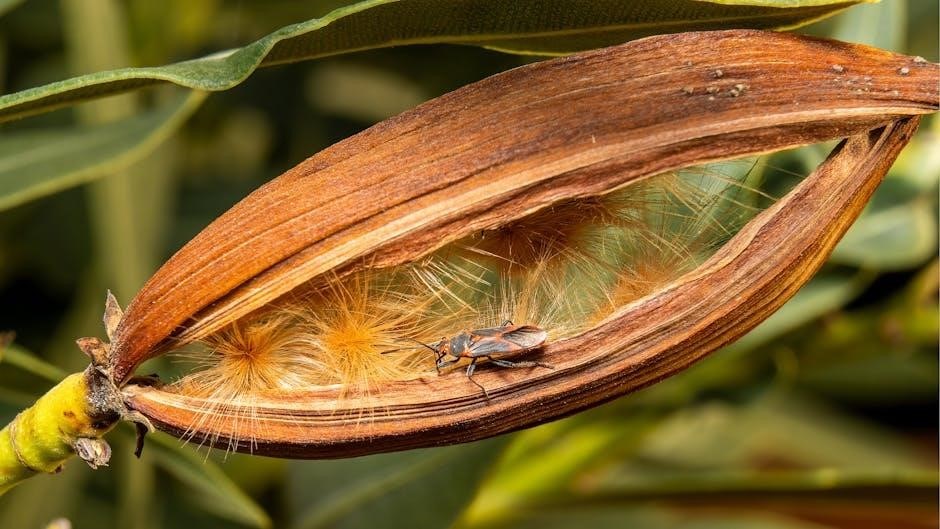
Detailed Identification Features
Key features like wing presence, surface textures (spiky or smooth), and how the pod opens—its dehiscence—are crucial for accurate seed pod identification.
Winged vs. Non-Winged Seed Pods
Distinguishing between winged and non-winged seed pods is a fundamental step in tree identification. Winged seed pods, such as those produced by maples and ash trees (often called samaras), possess a flattened, wing-like extension. This adaptation facilitates wind dispersal, allowing seeds to travel considerable distances from the parent tree.
Conversely, non-winged seed pods, like acorns from oak trees or the pods of legume families, rely on other dispersal mechanisms – animals, gravity, or even water. Observing the presence or absence of these “wings” immediately narrows down the potential tree species. The shape and size of the wing itself can also provide further clues, aiding in precise identification. Careful examination reveals nature’s ingenious dispersal strategies.
Spiky or Bristled Seed Pods
Seed pods adorned with spikes or bristles represent a fascinating adaptation for protection and dispersal. These structures often serve a dual purpose: deterring herbivores from consuming the seeds and facilitating attachment to animal fur for transport. Examples include certain species within the rose family (Rosaceae), exhibiting noticeable bristles.
The density, length, and rigidity of these spikes or bristles can vary significantly between species, offering valuable identification characteristics. Observing the arrangement – whether uniformly distributed or concentrated in specific areas – is also crucial. Handling these pods requires caution, as the spines can be quite sharp! Detailed observation of these features unlocks clues to the pod’s origin and dispersal strategy.
Pod Dehiscence (How Pods Open)
Pod dehiscence, or how a seed pod opens to release its seeds, is a critical identification feature. Different tree families employ diverse dehiscence mechanisms. Some pods split along pre-defined seams, while others develop pores or capsules that gradually release seeds. Observing how a pod opens provides valuable clues.
For instance, legume family (Fabaceae) pods typically split along two sutures, while others may twist and coil as they dry, ejecting seeds with force. The timing of dehiscence – whether it occurs while the pod is still attached to the tree or after it falls – is also significant; Careful examination of a pod’s opening mechanism reveals evolutionary adaptations for successful seed dispersal and species recognition.

Using a Dichotomous Key for Identification
Dichotomous keys offer a structured path to tree seed pod identification, presenting a series of choices leading to accurate species determination.
Understanding Dichotomous Key Terminology
Navigating a dichotomous key demands familiarity with specific terms. “Couplets” present paired, contrasting statements – choose the one that best describes the seed pod. “Lead” refers to each statement within a couplet, guiding you forward.
Terms like “alternate” versus “opposite” (leaf arrangement, influencing pod development) and “serrate” versus “entire” (leaf edge characteristics) are common. Understanding “appendages” – wings, spines, or bristles – is crucial.
Keys often use descriptive language regarding shape (ovoid, oblong), size (measured in millimeters), and surface texture. Accurate observation and precise matching of these terms are vital for successful tree seed pod identification. Don’t hesitate to consult a glossary if unfamiliar with a term!
Step-by-Step Guide to Using a Key
Begin at the first couplet of the dichotomous key. Carefully read both statements and select the one that accurately describes your tree seed pod. This choice directs you to another couplet number.
Continue this process, meticulously comparing your specimen to each statement. Avoid assumptions; base your decisions solely on observable characteristics. If unsure, revisit earlier steps to confirm your previous choices.
Follow the key until you reach a final identification, typically a tree species name. Double-check this identification using field guides or online resources to ensure accuracy. Remember, successful tree seed pod identification relies on patience and precise observation!

Specific Tree Families and Their Seed Pods
Explore diverse families like Legume, Rose, and Aster; each exhibits unique seed pod characteristics, aiding precise tree identification through careful observation.
Legume Family (Fabaceae) Seed Pods
Legume family seed pods, characteristic of plants like beans and peas, are typically elongated and split along two seams when mature – a process called dehiscence. These pods come in diverse shapes, ranging from slender and curved to stout and nearly cylindrical. Their size varies greatly depending on the species, from a few millimeters to over 20 centimeters in length.
Coloration is also a helpful identifier, with pods often transitioning from green to brown or reddish-brown as they ripen. Inside, you’ll find rows of seeds neatly arranged. Recognizing this distinct pod structure is crucial for identifying trees within the Fabaceae family, offering a reliable clue in the broader tree seed pod identification process. Careful observation of the pod’s opening mechanism and seed arrangement is key.
Rose Family (Rosaceae) Seed Pods
Rose family (Rosaceae) seed pods, often called hips, are remarkably diverse, but frequently exhibit a capsule or follicle structure. Many develop from an inferior ovary, meaning the pod forms around the flower’s base. These pods can be fleshy or dry, and their shapes range from spherical to elongated, sometimes with noticeable ridges or lobes.
Coloration varies widely, from bright red and orange (hips) to brown or greenish hues. Inside, you’ll typically find multiple seeds, often small and somewhat kidney-shaped. Identifying these pods requires attention to detail, noting the presence of remnants of floral structures (like sepals) and the pod’s overall texture. This is a vital step in tree seed pod identification, distinguishing Rosaceae members from other families.
Aster Family (Asteraceae) Seed Pods ― Seed-like Pods
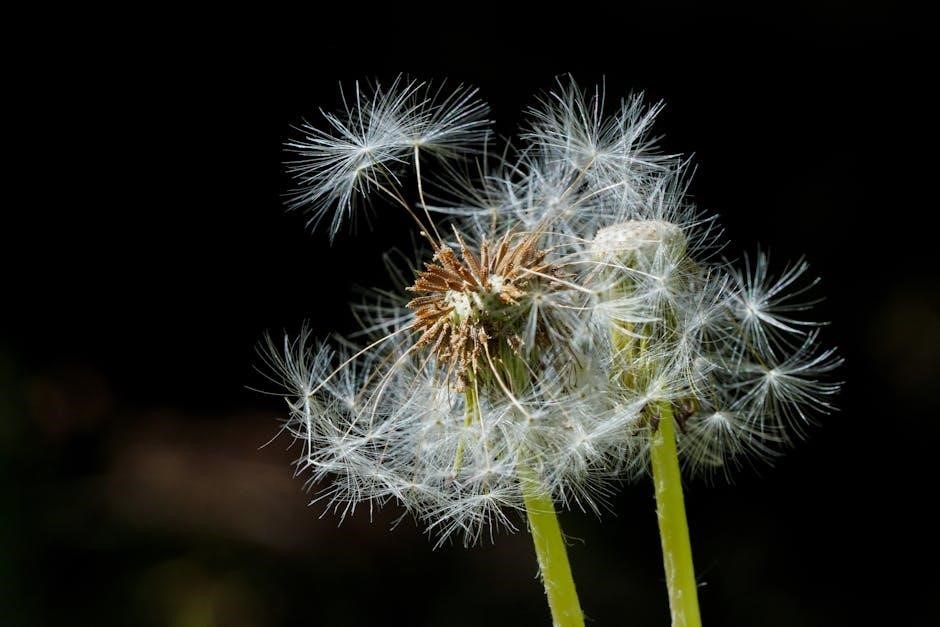
Asteraceae, also known as the sunflower family, presents a unique challenge in tree seed pod identification. Unlike typical pods, many Asteraceae members produce seed-like structures called cypselas – essentially, dry, one-seeded fruits resembling tiny seeds. These cypselas are often attached to a structure called a pappus, which can be feathery, bristly, or scale-like, aiding in wind dispersal.
Identifying these “seed pods” requires careful observation. Look for the pappus, which is a key characteristic. The cypselas themselves are usually small and relatively uniform in shape. Recognizing this seed-like form, rather than a traditional pod, is crucial for correctly identifying trees within the Asteraceae family, differentiating them from other species.

Collecting and Preserving Seed Pods
Carefully gather ripe seed pods before they burst, ensuring minimal damage; proper storage in cool, dry conditions maintains their integrity for study.
Best Practices for Collection
Timing is crucial when collecting seed pods; gather them just before natural dispersal, when they are mature but haven’t yet opened and released their seeds. Use gentle methods – hand-picking is ideal – to avoid damaging the pods or losing valuable seeds. Bring small, labeled bags or containers for each species to prevent mixing. Note the tree’s location and any distinguishing features alongside the collection date.
Handle pods with care, avoiding excessive pressure. If using tools, ensure they are clean to prevent contamination. Collect a representative sample from multiple branches to capture variation within the tree. Prioritize pods that appear healthy and undamaged, as these are more likely to contain viable seeds. Remember to obtain permission before collecting from private property.
Proper Storage Techniques
After collection, proper storage is vital for preserving seed viability. Initially, air-dry the seed pods in a cool, dry, and well-ventilated space, avoiding direct sunlight. Once thoroughly dry, store them in airtight containers – glass jars or sealed plastic bags work well. Label each container clearly with the species name, collection date, and location.
Maintain a cool temperature, ideally between 32-40°F (0-4°C), for long-term storage. A refrigerator is suitable, but avoid freezing. Periodically check the containers for signs of moisture or pest infestation. Properly stored seed pods can remain viable for months or even years, ensuring a valuable resource for future identification or propagation efforts.
Resources for Further Identification
Expand your knowledge with online databases, field guides, and botanical websites; these tools offer detailed images and descriptions for accurate seed pod identification.
Online Databases and Websites
Numerous online resources greatly assist in tree seed pod identification. Websites dedicated to botany and forestry often feature extensive image galleries and detailed descriptions of various seed pod types. These platforms frequently allow users to filter searches based on characteristics like shape, size, and color, streamlining the identification process.
Specialized databases, maintained by universities and research institutions, provide scientifically accurate information and often include distribution maps. Exploring these resources can reveal valuable insights into a pod’s origin and the tree species it belongs to. Remember to cross-reference information from multiple sources to ensure accuracy, as common names can vary regionally. Utilizing these digital tools empowers both amateur and experienced botanists alike.
Field Guides and Books
Traditional field guides and botanical books remain invaluable tools for tree seed pod identification, offering detailed illustrations and descriptive text. These resources often categorize pods by tree family, aiding in a systematic approach to identification. Look for guides specific to your geographic region for the most relevant information.
Comprehensive books on dendrology (the study of trees) frequently dedicate sections to seed morphology, including pod characteristics and dispersal mechanisms. The advantage of physical books lies in their portability and the ability to study specimens offline. Supplementing online resources with printed materials provides a well-rounded learning experience, fostering a deeper understanding of tree reproduction and identification.