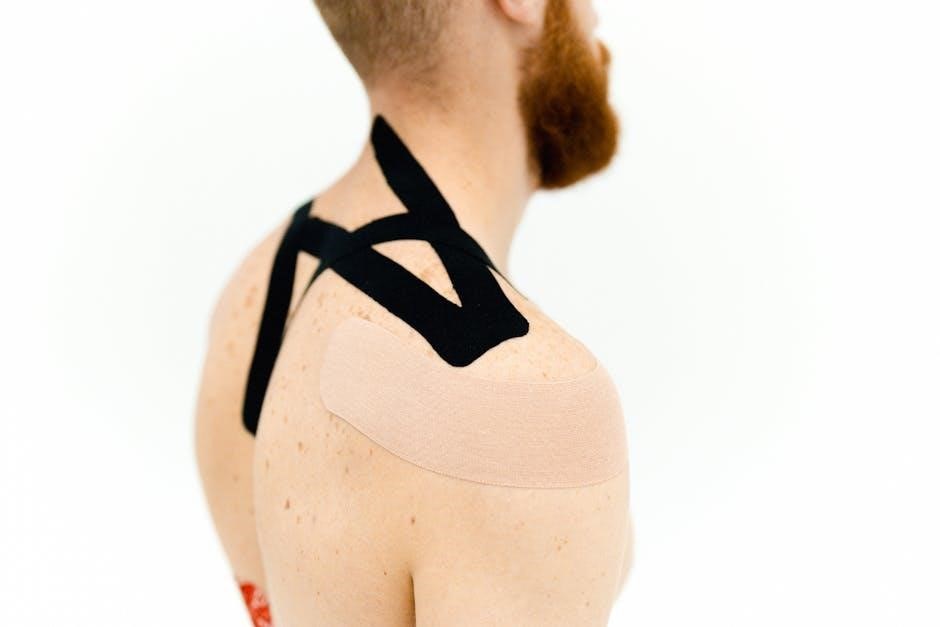
Shoulder Stability Exercises: A Comprehensive Guide
Strengthening your rotator cuff and scapular muscles is crucial for preventing injuries and improving overall shoulder function; explore detailed guides!
Shoulder stability isn’t about locking your arm in place; it’s the dynamic interplay of muscles, ligaments, and the joint capsule working together to control movement and prevent injury. Think of it as a finely tuned system, not a rigid structure.
A stable shoulder allows for a full range of motion – essential for everyday activities like reaching, lifting, and even simply maintaining good posture. When this stability is compromised, it can lead to pain, limited movement, and an increased risk of dislocations or impingement syndromes.
This guide focuses on exercises designed to enhance this stability. We’ll progress from foundational movements to more challenging drills, all aimed at strengthening the key muscle groups responsible for keeping your shoulder joint centered and functioning optimally. Remember to listen to your body and prioritize proper form over lifting heavy weights. Consistent practice is key!
Why Shoulder Stability Matters
Maintaining shoulder stability is paramount for a multitude of reasons, extending far beyond athletic performance. It directly impacts your ability to perform daily tasks without discomfort, from reaching for objects on a high shelf to simply brushing your hair.
A stable shoulder joint reduces the risk of common injuries like rotator cuff tears, impingement syndrome, and dislocations. These conditions can be debilitating, requiring extensive rehabilitation and potentially surgery. Proactive stability work is a preventative measure.
Furthermore, good shoulder stability contributes to improved posture and overall body mechanics. Weakness in the shoulder muscles can lead to rounded shoulders and a forward head posture, contributing to neck and back pain. Strengthening these muscles helps maintain proper alignment and reduces strain on other joints. Prioritizing stability enhances quality of life!

Understanding Shoulder Anatomy & Instability
The shoulder’s complex structure, involving bones, ligaments, and muscles, makes it prone to instability; knowing this aids effective exercise selection.
Key Muscles Involved in Shoulder Stability
Shoulder stability isn’t just about one muscle; it’s a coordinated effort from several key players. The rotator cuff muscles – supraspinatus, infraspinatus, teres minor, and subscapularis – are paramount. They control external and internal rotation, and abduction, centering the humeral head within the glenoid fossa.
Beyond the rotator cuff, the scapular stabilizers are vital. These include the trapezius, rhomboids, serratus anterior, and levator scapulae. They control scapular movement – protraction, retraction, elevation, and depression – providing a stable base for the arm to function.
Deltoids also contribute, though primarily for movement, they assist in dynamic stabilization. Weakness in any of these muscle groups can disrupt the delicate balance, leading to instability and potential injury. Targeting all these muscles in your exercise routine is essential for comprehensive shoulder health and function.
Common Causes of Shoulder Instability
Shoulder instability arises from a variety of factors, often a combination rather than a single cause. Traumatic injuries, such as dislocations or subluxations – where the humeral head partially or fully comes out of the socket – are frequent culprits. These injuries can damage the ligaments and labrum, compromising stability.
Repetitive overhead motions, common in sports like baseball, volleyball, and swimming, can also lead to instability over time, causing wear and tear on the shoulder structures. Genetic predisposition plays a role; some individuals are born with naturally looser ligaments.
Muscle imbalances, particularly weakness in the rotator cuff and scapular stabilizers, contribute significantly. Poor posture and inadequate conditioning can exacerbate these imbalances. Finally, age-related degeneration of tissues can also increase the risk of instability. Identifying the underlying cause is crucial for effective treatment and prevention.

Warm-up Exercises for Shoulder Stability
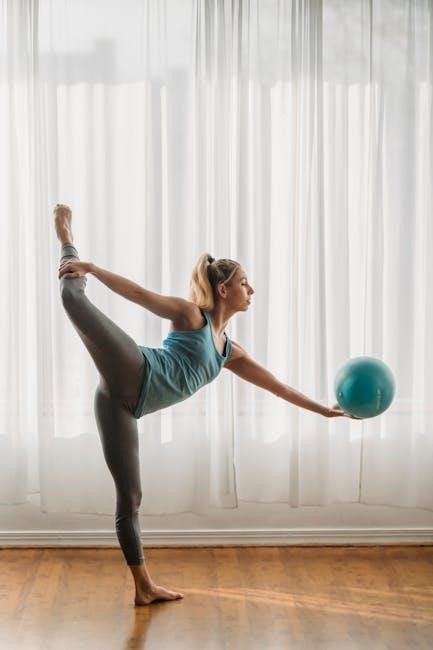
Preparing your shoulder muscles with dynamic movements and cardio is essential before starting stability exercises; enhance performance and reduce injury risk!
Dynamic Stretching for Shoulder Mobility
Before diving into strengthening exercises, preparing your shoulder joint with dynamic stretches is paramount. These movements focus on controlled, fluid motions that increase blood flow, improve range of motion, and warm up the muscles – unlike static stretches, which are best saved for cool-down.
Arm circles, both forward and backward, are excellent for initiating shoulder mobility. Begin with small circles and gradually increase the diameter. Another beneficial stretch is the “shoulder pass,” where you swing one arm across your body, gently hugging it with the opposite hand.
Wall slides are fantastic for scapular awareness and mobility. Stand with your back against a wall, arms bent at 90 degrees, and slide your arms up and down the wall, maintaining contact. Finally, incorporate torso twists with arms extended to engage the core and further enhance shoulder rotation. Remember to perform each stretch with control and avoid any pain.
Light Cardio to Prepare Muscles
Integrating a brief period of light cardiovascular activity before your shoulder stability exercises is a highly effective way to prime your muscles for work. This increases blood circulation, delivering vital oxygen and nutrients to the shoulder joint and surrounding tissues. Elevated muscle temperature also enhances flexibility and reduces the risk of injury.
Simple options include jumping jacks, high knees, butt kicks, or even brisk walking for 5-10 minutes. Arm circles performed at a faster pace can also contribute to warming up the shoulder muscles specifically. The goal isn’t to exhaust yourself, but rather to gently elevate your heart rate and body temperature.
Avoid intense cardio that could fatigue your shoulder before the strengthening exercises. Focus on movements that engage the upper body without placing excessive stress on the joint. Consider incorporating shadow boxing with light punches to further activate shoulder muscles in a functional manner.

Core Shoulder Stability Exercises
These foundational exercises target key muscles, enhancing control and preventing injury; focus on proper form and controlled movements for optimal results.
External Rotation with Resistance Band
This exercise is fundamental for strengthening the external rotator cuff muscles – infraspinatus and teres minor – vital for shoulder stability. Secure a resistance band to a stable object at elbow height. Keeping your elbow tucked into your side at a 90-degree angle, slowly rotate your forearm outwards, away from your body.
Maintain a controlled movement throughout the entire range of motion, resisting the pull of the band. Focus on squeezing your shoulder blade slightly back and down during the rotation. Avoid letting your wrist drift or using momentum to complete the exercise.
Perform 3 sets of 15-20 repetitions on each arm. Start with a light resistance band and gradually increase the resistance as your strength improves. Proper form is paramount; prioritize quality over quantity. This exercise directly addresses common imbalances that contribute to shoulder instability and pain.
Scapular Squeezes
Scapular squeezes, also known as shoulder blade retractions, are a cornerstone exercise for improving posture and enhancing shoulder stability. Sit or stand with good posture, shoulders relaxed. Gently squeeze your shoulder blades together, as if trying to hold a pencil between them.

Focus on drawing your shoulder blades back and down, avoiding shrugging your shoulders upwards. Hold the squeeze for 2-3 seconds, feeling the muscles between your shoulder blades contract. Slowly release the squeeze, returning to the starting position;
Complete 3 sets of 15-20 repetitions. This exercise strengthens the rhomboids and trapezius muscles, which are crucial for controlling scapular movement and providing a stable base for the shoulder joint. Consistent practice will improve your posture and reduce the risk of shoulder impingement and pain.
Rows (Dumbbell or Resistance Band)
Rows are excellent for strengthening the back muscles that support shoulder stability, including the rhomboids, trapezius, and rear deltoids. You can perform rows using dumbbells or a resistance band.
For dumbbell rows, hinge at the hips with a flat back, keeping your core engaged. Let the dumbbells hang straight down. Pull the dumbbells up towards your chest, squeezing your shoulder blades together. Lower the dumbbells slowly and with control.
With a resistance band, secure the band around a stable object. Sit or stand with good posture and pull the band towards your chest, maintaining a straight back and squeezing your shoulder blades. Perform 3 sets of 10-12 repetitions. Focus on controlled movements and proper form to maximize effectiveness and prevent injury.

Advanced Shoulder Stability Exercises
Progress to more challenging movements, focusing on controlled strength and endurance; these exercises build upon foundational stability for peak performance gains!
Y, T, W Raises
Y, T, W raises are excellent for strengthening the posterior shoulder muscles and improving scapular control – vital components of shoulder stability. These exercises target the lower trapezius, rhomboids, and rear deltoids, often underactive muscles contributing to poor posture and instability.
To perform, lie face down on a bench or the floor. Keep your arms extended and thumbs pointing upwards. Lift your arms, forming a “Y” shape, squeezing your shoulder blades together. Lower slowly. Repeat for the “T” shape (arms extended to the sides) and “W” shape (elbows bent, arms raised).
Focus on maintaining a neutral spine and controlled movements throughout. Start with light or no weight, gradually increasing resistance as strength improves. Proper form is paramount to avoid injury and maximize effectiveness. Aim for 3 sets of 10-15 repetitions for each letter shape, ensuring a full range of motion with each rep.
Shoulder Press Variations (Light Weight)
Shoulder press variations, performed with very light weights, contribute to dynamic shoulder stability by challenging the muscles responsible for controlling movement during pressing motions. These aren’t about building bulk, but about enhancing neuromuscular control and endurance.
Variations include seated dumbbell shoulder presses, Arnold presses (rotating the palms during the lift), and front raises. Maintain a stable core and avoid arching your back. Focus on slow, controlled movements, emphasizing the engagement of the shoulder stabilizers throughout the exercise.
Crucially, use a weight that allows you to maintain perfect form for the entire set. If you notice any wobbling or loss of control, reduce the weight immediately. Aim for 3 sets of 12-15 repetitions, prioritizing quality over quantity. Remember, the goal is stability, not maximal strength.
Cool-down & Stretching
Gentle stretching post-workout reduces muscle soreness and improves flexibility; prioritize holding each stretch for 30 seconds, breathing deeply for optimal recovery.
Static Stretches for Shoulder Muscles
Following your shoulder stability workout, incorporating static stretches is paramount for enhancing flexibility and reducing muscle tension. Begin with the cross-body shoulder stretch, gently pulling one arm across your body and holding it with the opposite hand, feeling a stretch in the rear deltoid.
Next, perform the overhead triceps stretch, reaching one arm overhead and bending at the elbow, then gently pulling the elbow towards your head with the other hand. This targets the triceps and shoulder capsule.
Don’t forget the doorway chest stretch – place your forearms on a doorway frame and lean forward, opening up your chest and stretching the pectoral muscles.
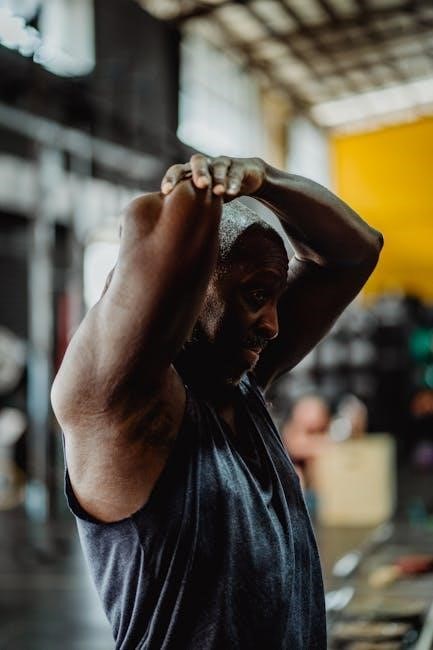
Finally, the sleeper stretch is excellent for internal rotation; lie on your side with your affected arm bent at 90 degrees and gently push your forearm towards the floor. Remember to hold each stretch for 20-30 seconds and breathe deeply throughout. Consistent stretching promotes long-term shoulder health.
Importance of Post-Exercise Recovery
Adequate post-exercise recovery is just as vital as the shoulder stability exercises themselves. Allowing your muscles time to repair and rebuild is crucial for preventing injuries and maximizing gains. Prioritize sufficient sleep – aim for 7-9 hours nightly – as this is when the body undertakes significant repair work.
Nutrition plays a key role; consume a protein-rich meal or snack within an hour of finishing your workout to aid muscle recovery. Hydration is also essential; replenish fluids lost during exercise by drinking plenty of water.
Consider incorporating active recovery techniques, such as light walking or foam rolling, to improve blood flow and reduce muscle soreness. Avoid strenuous activity immediately following a shoulder workout.
Listen to your body and don’t push through pain. Ignoring warning signs can lead to more serious injuries. Consistent recovery practices will ensure you can continue to progress with your shoulder stability training safely and effectively.