
Police Academy Workout PDF: A Comprehensive Training Guide
This guide details fitness preparation for police recruits, encompassing crucial elements like cardiovascular endurance, muscular strength, and core stability․
It references Cooper Standards,
utilized by agencies like Pennsylvania’s MPOETC,
and provides insights into state-specific requirements
such as those in Minnesota, Connecticut, and Ohio․
Passing all components – sit-ups, push-ups,
and running/rowing – is essential for academy acceptance․
Understanding the Importance of Physical Fitness for Police Recruits
Physical fitness is paramount for police recruits, extending far beyond simply meeting minimum academy standards․ The demands of law enforcement are incredibly strenuous, requiring officers to handle physical confrontations, pursue suspects, and perform duties in challenging environments․ A robust fitness level directly correlates with an officer’s safety, effectiveness, and longevity in the field․
Academies, like Tri-C in Cleveland, Ohio, utilize comprehensive Physical Fitness Assessments (PFAs) – encompassing sit-ups, push-ups, and a 1․5-mile run – as a crucial gatekeeping measure․ These tests aren’t arbitrary; they’re designed to simulate the physical stressors encountered on the job․ Furthermore, agencies such as the Saint Paul Police Department (SPPD) and Minnesota State Troopers rely on percentile-based standards, like the 60th percentile for the 2000m row, emphasizing a higher level of preparedness․
The Commonwealth of Pennsylvania’s MPOETC employs Cooper Health-Based norms, scientifically validated for both general populations and law enforcement, ensuring fair and relevant assessments․ Meeting these standards isn’t just about passing a test; it’s about building a foundation for a successful and safe career in policing․
The Role of Cooper Standards in Police Academy Assessments
Cooper Standards have become a cornerstone of physical fitness assessments within numerous police academies across the United States․ Their widespread adoption stems from their scientific validity and relevance to the demands of law enforcement․ Developed by Dr․ Kenneth H․ Cooper, these norms provide a standardized and objective method for evaluating a recruit’s physical capabilities․
The Municipal Police Officers Education and Training Commission (MPOETC) in Pennsylvania mandates the use of Cooper Health-Based norms and protocols for assessing cadet fitness levels․ Similarly, the Law Enforcement Council of Connecticut utilizes the 40th percentile of Cooper Standards as a minimum employment requirement․ This demonstrates a commitment to ensuring recruits possess the necessary physical attributes to perform their duties effectively․
These standards aren’t simply arbitrary numbers; they are based on research involving both general populations and law enforcement samples, representing a diverse cross-section of individuals․ Utilizing Cooper Standards ensures fairness and provides a benchmark for recruits to strive towards, ultimately enhancing officer safety and performance․
Cooper Standards: A Detailed Overview
Cooper Standards encompass a series of tests designed to measure different aspects of physical fitness, crucial for police work․ These typically include assessments of cardiovascular endurance, muscular strength, and muscular endurance․ The 1․5-mile run evaluates aerobic capacity, while push-ups gauge upper body strength․ Sit-ups assess the endurance of abdominal and core muscles – vital for maintaining stability and preventing injury․
Beyond these core tests, some agencies, like the Saint Paul Minnesota Police Department (SPPD), incorporate the 2000-meter row, requiring applicants to achieve a score at or above the 60th percentile for their age, gender, and weight․ The SPPD utilizes a specific tool to calculate these individualized requirements;
Importantly, Cooper Standards aren’t pass/fail; they are percentile-based․ This means performance is compared to a normative sample, allowing for differentiation between levels of fitness․ Meeting or exceeding specific percentiles, such as the 40th or 60th, often determines eligibility for employment or progression within a police academy․
Age and Gender Considerations in Fitness Testing
Police academy fitness tests aren’t universally applied; standards are frequently adjusted based on age and gender․ Recognizing physiological differences, agencies utilize Cooper Standards which provide norms tailored to these demographics․ This ensures fairness and accounts for natural variations in strength and endurance․
For example, the Saint Paul Minnesota Police Department (SPPD) explicitly factors age, gender, and weight into the required score for the 2000-meter row․ Applicants aren’t held to a single standard, but rather one appropriate for their specific profile․ This approach acknowledges that a 20-year-old male will likely have different capabilities than a 40-year-old female․
These adjustments are rooted in scientific data, reflecting the typical physical capabilities of different populations․ Failing to account for these factors could lead to discriminatory practices or unrealistic expectations․ Therefore, understanding these considerations is crucial for both recruits preparing for testing and agencies administering the assessments․
Weight-Based Fitness Requirements
Beyond age and gender, weight significantly influences fitness test expectations within police academy assessments․ The Cooper Standards, widely adopted by agencies like the Municipal Police Officers Education and Training Commission (MPOETC) in Pennsylvania, incorporate weight-based norms for certain exercises․
The Saint Paul Minnesota Police Department (SPPD) exemplifies this approach, mandating a 2000-meter row score at the 60th percentile, specifically determined by an applicant’s age, gender, and weight․ This isn’t a blanket requirement; heavier individuals are generally expected to achieve a lower score than lighter individuals, acknowledging the increased physical demand․
This weighting is logical – carrying additional mass requires greater exertion․ Utilizing weight-based standards promotes a more equitable evaluation, preventing unfairly penalizing applicants with higher body weights․ Recruits should therefore focus on optimizing their performance relative to their individual weight class, rather than striving for an arbitrary, universal benchmark․

Key Components of a Police Academy Physical Fitness Test
Police academy physical fitness tests are designed to assess a recruit’s foundational capabilities, mirroring the physical demands of law enforcement duties․ These tests aren’t merely about peak athletic performance, but rather demonstrate a baseline level of endurance, strength, and core stability․
Core components consistently include sit-ups, evaluating abdominal and core muscular endurance – crucial for maintaining posture and resisting fatigue․ Push-ups measure upper body strength, essential for tasks like self-defense and controlling suspects․ The 1․5-mile run assesses cardiovascular fitness, vital for pursuits and prolonged physical activity․
Furthermore, some academies, like the Saint Paul Minnesota Police Department (SPPD), incorporate a 2000-meter row, testing both endurance and overall strength․ The Tri-C Basic Police Academy in Cleveland, Ohio, specifically requires passing sit-ups, push-ups, and the 1․5-mile run in a single session․ Meeting all standards is non-negotiable for acceptance, as emphasized by American Military University (AMU)․
Sit-Ups: Assessing Abdominal and Core Endurance
The sit-up is a cornerstone of police academy physical fitness assessments, directly evaluating the endurance of abdominal and core muscles․ This isn’t simply about ‘having’ strong abs; it’s about sustained performance under fatigue – a critical requirement for officers facing dynamic, physically demanding situations․
According to the Law Enforcement Council of Connecticut, sit-ups are performed with bent legs and hands positioned alongside the ears, emphasizing proper form․ Scoring is based on the number of correctly performed repetitions within a specified timeframe; This assesses the muscular endurance necessary for maintaining posture, resisting injury, and effectively performing tasks requiring core stability․
The test measures a candidate’s ability to repeatedly contract and relax abdominal muscles, simulating movements encountered during physical confrontations, prolonged standing, and equipment carrying․ Cooper Standards, utilized by agencies like Pennsylvania’s MPOETC, provide scientifically validated norms for acceptable performance, often based on age and gender percentiles․
Push-Ups: Measuring Upper Body Strength
Push-ups are a fundamental component of police academy physical fitness tests, designed to assess upper body muscular strength and endurance․ This evaluation isn’t merely about maximal strength; it gauges the ability to repeatedly exert force – vital for tasks like climbing, restraining suspects, and self-defense maneuvers․
Successful completion requires maintaining a strict body position throughout the exercise, demonstrating core stability alongside upper body power․ The test typically involves performing as many push-ups as possible with proper form until exhaustion or form breakdown․ This directly correlates to an officer’s capacity to overcome physical resistance and maintain control in challenging scenarios․
Cooper Standards, employed by agencies like Pennsylvania’s MPOETC, establish objective benchmarks for acceptable performance, often categorized by age and gender․ Meeting these standards signifies a recruit possesses the foundational upper body strength necessary to safely and effectively perform essential law enforcement duties․ Preparation focuses on building both strength and muscular endurance․
1․5-Mile Run: Evaluating Cardiovascular Fitness
The 1․5-mile run is a critical element in police academy fitness assessments, directly measuring a recruit’s cardiovascular endurance and aerobic capacity․ This isn’t simply about speed; it assesses the body’s ability to sustain prolonged physical exertion – essential for pursuits, foot patrols, and responding to dynamic incidents․
A strong cardiovascular system allows officers to maintain alertness and make sound decisions even under physical stress․ The test requires completing the 1․5-mile distance as quickly as possible, with performance evaluated against age and gender-specific standards, often based on Cooper Standards․
Agencies like Tri-C Basic Police Academy in Cleveland, Ohio, mandate passing this component alongside sit-ups and push-ups for acceptance․ Effective preparation involves interval training, tempo runs, and long-distance conditioning to improve both speed and stamina․ Achieving a satisfactory time demonstrates a recruit’s readiness for the physical demands of police work․
2000-Meter Row: A Test of Endurance and Strength
The 2000-meter row is a demanding assessment of both muscular endurance and cardiovascular fitness, increasingly utilized by police departments to simulate the physical strain of real-world policing scenarios․ Unlike running, rowing engages multiple muscle groups simultaneously – legs, back, core, and arms – providing a full-body workout and evaluating overall physical conditioning․
Saint Paul Minnesota’s SPPD, mirroring Minnesota State Troopers’ standards, requires applicants to achieve a score at the 60th percentile for their age, gender, and weight․ This highlights the importance of not only endurance but also relative strength․ Departments utilize tools to calculate specific time requirements based on these factors․
Preparation necessitates consistent rowing practice, focusing on technique to maximize efficiency and minimize injury risk․ Incorporating interval training and distance work builds both speed and stamina․ Successfully completing the 2000-meter row demonstrates a recruit’s capacity to perform sustained, strenuous activity․
Preparing for the Police Academy Fitness Test
Effective preparation for the police academy fitness test demands a structured and progressive training program, focusing on the key components assessed: cardiovascular endurance, muscular strength, and core stability․ Success isn’t about peak performance on test day, but consistent improvement leading up to it․ Remember, all performance standards must be met – there are no exceptions, as emphasized by American Military University (AMU)․

A comprehensive plan should incorporate both cardiovascular training (running and rowing) and strength training (push-ups and sit-ups)․ Prioritize proper form over speed or repetitions to prevent injuries․ Understanding the specific standards of the academy you’re applying to is crucial; requirements vary by state and department․
Utilize resources like online fitness calculators to determine your baseline and track progress․ Consistent effort, combined with a well-designed workout schedule, will significantly increase your chances of success and prepare you for the rigors of academy training․
Cardiovascular Training for the 1․5-Mile Run & 2000m Row
Robust cardiovascular fitness is paramount for success in both the 1․5-mile run and the 2000-meter row, core components of many police academy physical fitness tests․ Training should incorporate interval training, long-distance steady-state runs, and rowing-specific workouts․ Interval training improves speed and endurance, while longer, slower distances build a solid aerobic base․
For the 1․5-mile run, gradually increase your mileage and incorporate speed work, such as sprints and tempo runs․ For the 2000-meter row, focus on technique and endurance․ The Saint Paul Police Department (SPPD) specifically requires applicants to achieve the 60th percentile based on age, gender, and weight, highlighting the importance of targeted training․
Consistency is key․ Aim for at least three to four cardiovascular workouts per week, progressively increasing intensity and duration․ Don’t neglect proper warm-up and cool-down routines to prevent injuries and optimize recovery․
Strength Training for Push-Ups and Sit-Ups
Developing muscular endurance is crucial for maximizing performance on the push-up and sit-up portions of the police academy physical fitness test․ A dedicated strength training program should focus on building both strength and stamina in the relevant muscle groups․
For push-ups, incorporate variations like incline push-ups, decline push-ups, and wide-grip/narrow-grip push-ups to target different muscle fibers․ Focus on proper form to avoid injury and maximize effectiveness․ Sit-up training should extend beyond basic sit-ups to include exercises that strengthen the core, such as planks, Russian twists, and leg raises․
The Law Enforcement Council of Connecticut utilizes Cooper Standards, assessing abdominal and core endurance with sit-ups․ Aim for 3-4 strength training sessions per week, allowing for adequate recovery between workouts․ Remember, consistent effort and proper technique are vital for achieving optimal results․
Sample Workout Schedule: Week 1-4
This initial phase focuses on building a foundational level of fitness, preparing your body for more intense training․ Prioritize consistency and proper form over pushing yourself too hard, too soon․
Monday: Strength Training (Push-ups 3 sets of max reps, Sit-ups 3 sets of max reps, Plank 3 sets of 30-60 seconds)․ Tuesday: Light Cardio (30-minute jog or brisk walk)․ Wednesday: Active Recovery (Yoga or stretching)․ Thursday: Repeat Monday’s Strength Training․ Friday: Interval Training (Alternating between high-intensity bursts and recovery periods for 20-30 minutes)․ Saturday: Long Cardio (45-60 minute run/row at a moderate pace)․ Sunday: Rest․
Gradually increase repetitions and sets each week․ Focus on exercises that directly translate to the physical fitness test requirements, like the 1․5-mile run and 2000-meter row, as highlighted by agencies like Saint Paul Minnesota’s SPPD․ Remember, all performance standards must be met to pass, with no exceptions․
Sample Workout Schedule: Week 5-8
This phase intensifies training, mirroring the demands of the police academy’s physical fitness assessment․ Expect increased volume and intensity, pushing your cardiovascular and muscular endurance to new limits․ Prioritize recovery to prevent injury․
Monday: Strength Training (Weighted Push-ups 4 sets of 8-12 reps, Weighted Sit-ups 4 sets of 15-20 reps, Core Circuit – Russian Twists, Leg Raises, Bicycle Crunches)․ Tuesday: Interval Cardio (High-intensity intervals on the treadmill or rowing machine for 30-40 minutes)․ Wednesday: Active Recovery (Foam rolling and dynamic stretching)․ Thursday: Repeat Monday’s Strength Training․ Friday: Tempo Run (Sustained, challenging run for 30-40 minutes)․ Saturday: Long Cardio (60-75 minute run/row, incorporating interval bursts)․ Sunday: Rest․
Incorporate exercises to specifically improve performance on the 1․5-mile run and 2000-meter row, aligning with standards like those used by the Connecticut Law Enforcement Council․ Remember, meeting the 40th percentile of Cooper Standards is often a minimum requirement․
Specific Exercises for Improving Performance
Targeted exercises are crucial for maximizing scores on each component of the police academy fitness test․ Focusing on weaknesses identified during initial assessments is paramount․ This section details exercises to boost performance in sit-ups, push-ups, and cardiovascular endurance․
For Sit-Ups: Incorporate weighted sit-ups, decline sit-ups, and exercises targeting obliques (Russian twists, side planks)․ For Push-Ups: Progress from incline push-ups to standard push-ups, then to decline push-ups․ Add plyometric push-ups for explosive power․ For Running: Hill sprints build leg strength and cardiovascular capacity․ Tempo runs improve lactate threshold․ Interval training enhances speed and endurance․
Remember, the Saint Paul Minnesota SPPD requires applicants to achieve the 60th percentile on the 2000m row, emphasizing the need for dedicated rowing-specific training․ Consistent practice and progressive overload are key to success, mirroring the demands of the Tri-C Basic Police Academy assessment․
Exercises to Increase Sit-Up Performance
Improving sit-up performance requires a multifaceted approach, focusing on core strength and muscular endurance․ The Law Enforcement Council of Connecticut utilizes Cooper Standards, measuring abdominal and core muscular endurance through sit-ups performed with bent legs and hands alongside the ears․
Key exercises include: standard sit-ups, focusing on controlled movements; weighted sit-ups, adding resistance with a plate or dumbbell; decline sit-ups, increasing difficulty by elevating the feet; and leg raises, targeting lower abdominal muscles․ Incorporate exercises like Russian twists and side planks to strengthen obliques, contributing to overall core stability․
Progressive overload is vital: gradually increase repetitions or resistance․ Remember, the goal isn’t just quantity, but correctly performed repetitions․ Consistent training, mirroring the demands of police academy assessments, will build the necessary endurance to meet minimum scores and exceed expectations․
Exercises to Improve Push-Up Capacity
Boosting push-up capacity demands a progressive training strategy targeting chest, shoulders, and triceps․ Police academy fitness tests, as highlighted by American Military University (AMU), require meeting all performance standards, with no exceptions, making push-up proficiency crucial․
Effective exercises include: standard push-ups, focusing on proper form; incline push-ups, easing the difficulty by elevating hands; decline push-ups, increasing challenge by elevating feet; and diamond push-ups, emphasizing triceps․ Incorporate bench presses and dumbbell chest presses for supplemental strength building․
Focus on controlled movements and full range of motion․ Utilize variations like negative push-ups (slowly lowering the body) to build strength․ Progressive overload – increasing repetitions or sets – is key․ Remember, consistent practice, mirroring the demands of the physical fitness assessment, will yield significant improvements in upper body strength and endurance․
Exercises for Enhancing Running Endurance
Preparing for the 1․5-mile run, a core component of many police academy physical fitness tests, requires a multifaceted approach to building cardiovascular endurance․ As noted in resources regarding academy preparation, consistently meeting all performance standards is non-negotiable․
Essential exercises include: interval training – alternating high-intensity bursts with recovery periods; tempo runs – sustained effort at a comfortably hard pace; and long, slow distance runs – building a base level of endurance․ Incorporate hill repeats to strengthen leg muscles and improve cardiovascular capacity․
Cross-training activities, such as swimming or cycling, can supplement running and reduce impact stress․ Don’t neglect strength training, focusing on legs and core․ Progressive overload – gradually increasing mileage or intensity – is vital․ Prioritize proper form and listen to your body to prevent injuries, ensuring peak performance on test day․
Warm-up and Cool-down Routines
Effective warm-up and cool-down routines are paramount for injury prevention and optimizing performance during police academy fitness training․ A proper warm-up prepares muscles for exertion, increasing blood flow and flexibility․ Begin with 5-10 minutes of light cardio, like jogging or jumping jacks․
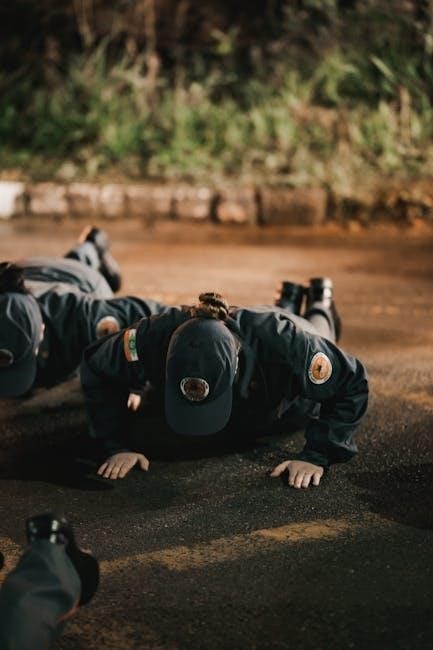
Follow with dynamic stretching, including arm circles, leg swings, and torso twists․ These movements mimic the exercises to be performed, further preparing the body․ A cool-down is equally crucial, gradually reducing heart rate and preventing muscle soreness․
Include 5-10 minutes of light cardio, followed by static stretching – holding each stretch for 20-30 seconds․ Focus on major muscle groups used during training․ Consistent implementation of these routines, alongside the rigorous demands of the academy, will contribute to sustained fitness and readiness․
Resources for Further Training and Information
Numerous resources are available to supplement your police academy fitness preparation․ State law enforcement agencies often provide specific guidelines and standards․ For example, the Law Enforcement Council of Connecticut details Cooper Standard percentile requirements for employment․
Online fitness calculators, like those used by the Minnesota State Troopers (referenced by Saint Paul Police Department applicants), can help determine personalized 2000-meter row requirements based on age, gender, and weight․ American Military University (AMU) offers insights into the uncompromising nature of academy fitness tests․
Additionally, explore resources from the Municipal Police Officers Education and Training Commission (MPOETC) in Pennsylvania, which utilizes Cooper Health-Based norms․ Remember to consult official academy materials and consider seeking guidance from certified fitness professionals for tailored training plans․
Official Police Academy Fitness Test Standards (State-Specific)
Fitness test standards vary significantly between states and even individual police departments․ Pennsylvania’s MPOETC mandates the use of Cooper Standards for assessing cadet physical fitness levels․ Connecticut’s Law Enforcement Council employs the 40th percentile of Cooper Standards as a minimum employment score․
The Saint Paul, Minnesota Police Department (SPPD) and Minnesota State Troopers require applicants to pass a 2000-meter row at the 60th percentile, factoring in age, gender, and weight․ Ohio’s Tri-C Basic Police Academy necessitates passing sit-ups, push-ups, and a 1․5-mile run in a single session for acceptance․
These examples highlight the importance of researching the specific requirements of the academy you intend to attend․ Standards are non-negotiable; AMU emphasizes that all performance benchmarks must be met to pass the test, with no exceptions․ Always prioritize official academy documentation for accurate information․
Online Fitness Calculators for Police Requirements
Preparing for the physical demands of a police academy often requires understanding personalized fitness benchmarks․ Fortunately, several online calculators can assist recruits in determining their target scores based on age, gender, and weight․ The Saint Paul, Minnesota Police Department (SPPD) directs applicants to utilize a specific tool to calculate their 2000-meter row requirements, mirroring the standards of the Minnesota State Troopers․
These calculators leverage the Cooper Standards, providing percentile-based goals․ Inputting your demographic information yields a target time or repetition count, offering a quantifiable measure of preparedness․ While these tools are valuable, remember they are estimates․
Always verify the specific requirements of your chosen academy․ Supplement calculator results with consistent training and practice tests․ Utilizing these resources alongside a structured workout plan maximizes your chances of success and ensures you meet the necessary physical standards for acceptance․